
The American Pope: a Guide Through Silence
Unlike Bergoglio, Pope Leo XIV moves at a different pace: less in the media spotlight, but determined to make his mark in his own way. And he has been doing so since his first days
THE CONTEXT
A conversation with Father James Martin about Pope Leo XIV’s early months, highlighting the small and significant decisions.
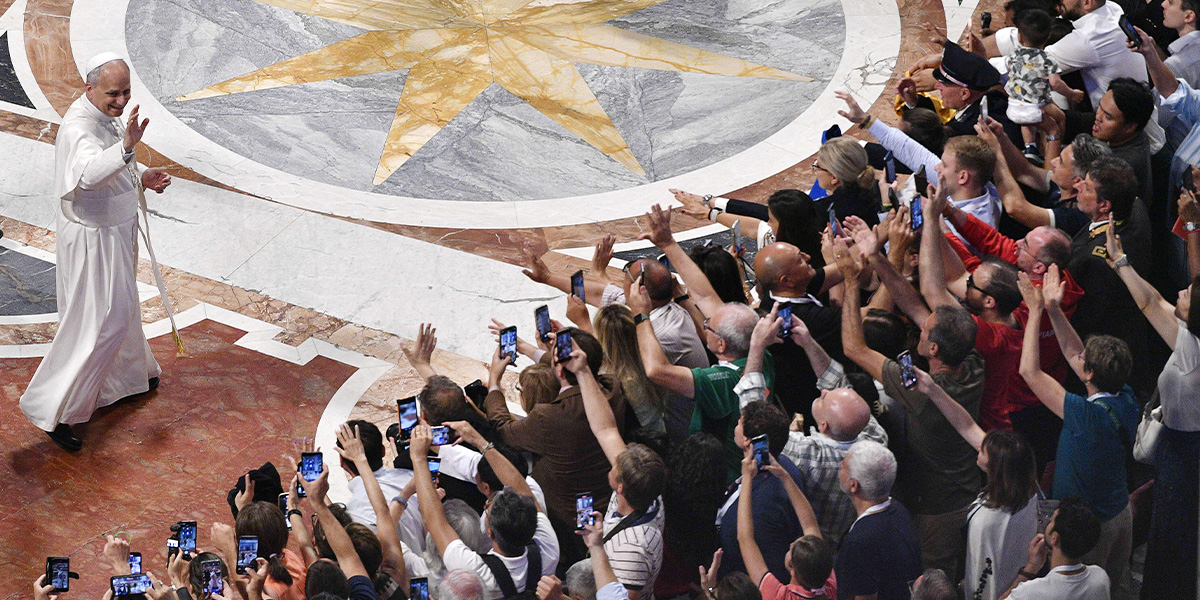
The first months of Pope Leo XIV have clearly shown that the Catholic Church has entered a new era. The comparison with Jorge Mario Bergoglio, Pope Francis, is inevitable: the Argentine Jesuit transformed the image of the papacy, making it immediately recognizable through simple yet powerful gestures, from embracing migrants in Lampedusa to the famous “Who am I to judge?” Leo XIV takes a different approach: he does not seek media soundbites nor raise the tone; rather, he tries to leave his mark on history in a different way.


For those who look closely, even in the first months of his pontificate, the new pontiff has made small and large decisions that reveal much about his intentions for the coming months and years. The transformation of Castel Gandolfo into Borgo Laudato Si’, a laboratory of integral ecology; the canonization of Carlo Acutis and Pier Giorgio Frassati; constant calls for peace in war zones; the stern warning to bishops on the issue of abuse; granting traditionalists permission to celebrate Mass in Latin at St. Peter’s Basilica. These are varied choices, some more media-friendly, others more reflective, but all demonstrate a desire to mend fractures in the Church by seeking unity without fear of showing the right firmness.
To better understand and grasp the deep meaning of these gestures, it is useful to listen to the voice of Father James Martin, an American Jesuit known internationally. A writer and essayist, he has collaborated for years with America – The Jesuit Review and is a consultor to the Vatican Dicastery for Communication. He is also the founder of Outreach, a Catholic network created to offer support and dialogue spaces to LGBTQ+ people and their families, with conferences, publications, and pastoral initiatives promoting respect and welcome. His latest book published in Italy is “Lazzaro, vieni fuori!” (Libreria Editrice Vaticana).
Leo XIV received him in a private audience on September 1st. It was not merely a courtesy meeting between two American Catholics but a strong signal of continuity with Pope Francis, who had already encouraged Martin in his ministry, confirming a precise pastoral line: listening to the peripheries, recognizing wounds, and the willingness to offer an ecclesial space to those too often excluded. Leo XIV wanted to reaffirm that his Church does not fear dialogue, much less welcome.
According to Father Martin, the Pope has adapted to his new role with little difficulty in these early months. “I have the impression,” he explains, “that the Holy Father is fitting in very well. Certainly, he has a different personality from Pope Francis, but that is a good thing. Leo XIV is an intelligent, reflective, reserved man, very sharp and above all an excellent listener. I believe Leo just needs to be Leo. If you think about it, all recent popes have been very different men: Paul VI was not like John Paul I, who was not like John Paul II, who was not like Benedict XVI, who was not like Francis, who is not like Leo. The key is for each to be himself, doing what he considers most suitable to the Church’s needs and his own gifts. I think the world will discover in Pope Leo a capable communicator, a wise man, and a great pope.”
For Martin, the distinctive traits of Robert Francis Prevost are easy to recognize because he has made them clear from the start: “First of all, his devotion to Jesus Christ and fidelity to the Church. Then the desire to carry forward, naturally in his own way, Francis’s legacy, particularly synodality and care for those living on the margins. A third element is the emphasis on unity: his gestures toward different sensibilities, progressives and traditionalists, have been splendid. This is also evident in the motto he chose: In illo Uno, unum (In the One, we are one). Finally, his constant concern for peace, in places like Gaza and Ukraine. In almost every Angelus or public audience, he returns to this theme. To me, it is clear that his election was the work of the Holy Spirit.
In his messages, a constant focus on peace, in places such as Gaza and Ukraine
From his very first address, peace has been the common thread in every public intervention of the Pontiff. There is no Angelus in which Leo XIV does not mention at least one ongoing conflict, a sign of the very difficult times we live in. Another characteristic element is synodality - that is, the choice to govern by consulting the faithful and bishops, making the Church a body that walks together. “I was struck that he mentioned it immediately, appearing on the balcony after the election,” says Martin. “Perhaps also because he was elected at sixty-nine years old, he does not give the impression of being, as we say in English, ‘a man in a hurry.’ His gestures to the right and left have been very wise.”
One of the most emblematic moments of this start was the inauguration, on September 5th, of Borgo Laudato Si’ at Castel Gandolfo. For centuries the summer residence of popes, closed and reserved, the villa was transformed into a center of integral ecology: organic gardens and greenhouses, educational paths for students, workshops for families. It is the concrete translation of Francis’s encyclical “Laudato si’”. Martin interprets this choice as follows: “Pope Leo XIV is certainly a pope of gestures. But so was Francis, who embraced a man disfigured by illness or washed the feet of prisoners. Likewise, Leo XIV is also a man of words, in his Angelus speeches and audiences. I would say that all popes, from John XXIII onward - and like Jesus himself - have known how to use words and gestures together.”
One gesture by Leo XIV that sparked discussion was the authorization given to Cardinal Raymond Burke to celebrate the Mass in Latin in St. Peter’s Basilica, on the occasion of the pilgrimage of groups linked to Summorum Pontificum. This refers to the apostolic letter with which Benedict XVI, in 2007, granted wide freedom in the use of the 1962 Missal, the Tridentine liturgy prior to the Second Vatican Council. Every year, believers from various countries converge in Rome to request that this liturgical form continue to have a place in Church life, and celebrating in St. Peter’s is a particularly significant recognition for them. “Many will be surprised,” Martin observes, “but I think it was a very good decision. The Tridentine Mass is part of our tradition and, although I celebrate in the vernacular, I believe it is right to acknowledge that for many that liturgical form is a profound consolation. It is, once again, a gesture of the Holy Father to foster unity.”
On September 7th, Leo XIV canonized Carlo Acutis and Pier Giorgio Frassati. Acutis, a Milanese teenager who died in 2006 from leukemia, was passionate about computing and had created a digital exhibition on Eucharistic miracles. Frassati, a young man from Turin in the 1920s and son of Alfredo, historic director of La Stampa, was a sportsman and mountain lover, opposed fascism, and dedicated his life to helping the poor. “Both,” says Martin, “send strong messages to today’s believers. As a scholar of the saints, I would say we need to look at their whole lives, not just one aspect. Carlo was not simply a computer-savvy boy devoted to the Eucharist, important as that is; he was also a young man who knew suffering. Pier Giorgio was not only a climber and organizer of youth activities but also a young man who protested against fascism. The invitation is to see their lives in their fullness. Frankly, I think it is wonderful that God has given us two new saints so relevant and so interesting to today’s youth.”

AN IN-DEPTH LOOK
American Catholics
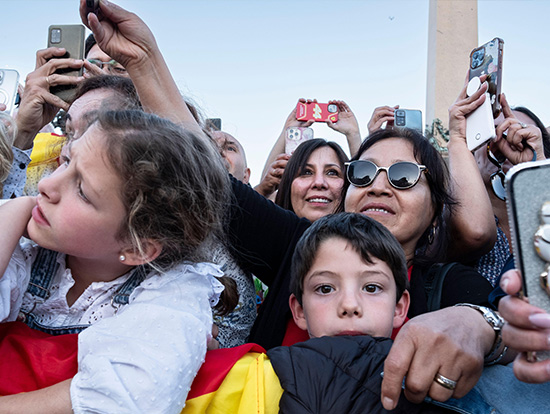
In the United States, 20% of the population identifies as Catholic. Of these, 54% are white and 36% are of Hispanic origin. More than four in ten are immigrants or children of immigrants. 53% identify with the Republican Party, 43% with the Democrats, and 59% consider themselves supportive of legal abortion.A long-standing delicate chapter concerns the Church’s approach to LGBTQ+ believers, a topic that has accompanied ecclesial debate for years and which Leo XIV seems to want to address without ambiguity, in the spirit of evangelical welcome. It is a field that Father Martin has been involved in for years and that has become an integral part of his pastoral mission and evangelization efforts. “The Catechism says that homosexual acts are ‘objectively disordered.’ But it also reminds us that homosexual persons must be welcomed with respect, compassion, and sensitivity,” says Martin. “This is often forgotten. More deeply, we must remember that the heart of Christian and Catholic teaching is not a book but a person: Jesus Christ. And in the Gospels, we always see Him reaching out to those on the margins. This pastoral of welcome is perfectly in line with the Gospel.”
The fact that Leo XIV is the first pope born in the United States inevitably carries a complex political dimension. American Catholicism includes very different sensibilities: on one side, communities identifying with the Church’s social teaching on justice, migrants, and poverty; on the other, groups that in recent years have strongly supported U.S. President Donald Trump, despite many of his positions conflicting with Catholic teaching, especially on welcome and protection of the vulnerable. “Naturally, popes and bishops rightly avoid entering directly into political situations. But sometimes proclaiming the Gospel may seem, rightly or wrongly, a political act,” explains Father Martin. “For example, the Gospel asks us to care for the foreigner, that is, the migrant or refugee. It also says that when we do not care for the poor, the sick, and the hungry, we do not care for Jesus (Matthew chapter 25). Proclaiming this may have political implications, but the reason we preach it is not because we are Democrats or Republicans, but because we are Christians.”
Looking ahead, Martin identifies opportunities and challenges for Prevost’s pontificate: “Continuing the work of synodality; continuing to foster the unity of the Church; and, since this is an area I know well, continuing openness toward LGBTQ+ people. And instead of ‘risks,’ I would talk about challenges. There are also three of those: Gaza, Ukraine, and Sudan. Each of these situations, where so much death occurs, will demand all of the pope’s pastoral and leadership abilities.”

James Martin
American Jesuit and writer, consultant to the Vatican’s Secretariat for Communications. Author of “Building a Bridge: How the Catholic Church and the LGBT Community Can Enter into a Relationship of Respect, Compassion, and Sensitivity”.

Andrea Fioravanti
Journalist at Linkiesta. Founder of the radio program Europhonica, he previously worked at La Stampa and Rete 4 as a television writer. Organizer of the Festival of the Middle Ages and the Festival of Ancient Umbria.