
Palazzo Carciotti Begins a New Chapter with Agorai Innovation Hub: Where Generali Was Born, Innovation Comes to Life
Where it all began, the future now takes shape. Palazzo Carciotti, the historic first headquarter of Assicurazioni Generali in Trieste, is set for a new life as the home of Agorai Innovation Hub: a unique ecosystem of basic and applied research that will leverage the most advanced technologies in Data Science and Artificial Intelligence to improve people’s quality of life
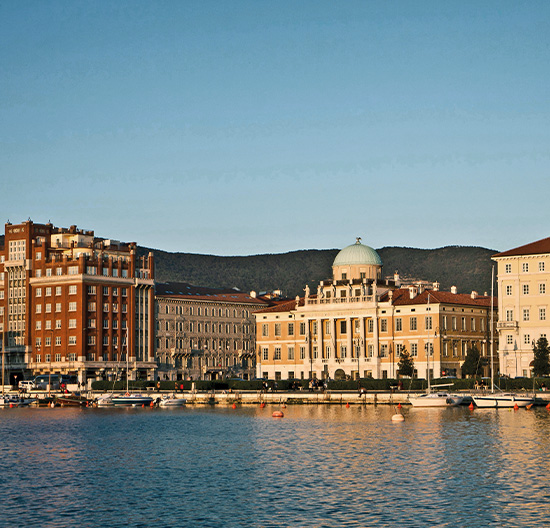
On December 9th, 2024, following a public tender issued by the Municipality of Trieste, Generali acquired Palazzo Carciotti, the historic building where Assicurazioni Generali was founded 193 years earlier, in 1831. With this acquisition, the Group aims to return to Trieste a landmark of its architectural, economic, and social heritage.
Designed in 1798 by architect Matteo Pertsch for the Greek merchant Demetrio Carciotti from Smyrna, the building holds a prominent place in Generali’s history and an emblematic role in that of Trieste - a city that has hosted the Company since its inception.
Overlooking the Rive, just steps from the sea and in the heart of what was the bustling mercantile port area between the 18th and 19th centuries, Palazzo Carciotti was chosen by the founders of the “Imperial Royal Privileged Company of Austro-Italian General Insurance” to host the first offices of the newly established company. Fourteen employees worked there, alongside ten colleagues in Venice’s Procuratie - a founding team that preceded the more than 87,000 collaborators who today serve 71 million clients in 50 countries.
History, tradition, and future

Choosing this location was natural - not only for the undeniable symbolic value of the building but also for its proximity to the economic heart of the city. It marked a clear break from tradition, which had seen major companies settle further inland, around the historic centre.
Commenting on the “return to Palazzo Carciotti,” the building “where our story began,” Generali Chairman Andrea Sironi and Group CEO Philippe Donnet reaffirmed the Group’s intention to bring “new life” to a symbol of the city, “with the same innovative spirit that characterized its original construction.”
The goal is to restore centrality to this building - “one of the most imposing and successful Italian buildings of the early 19th century,” and a shining example of Trieste’s Neoclassicism - through ambitious innovation and education projects developed in collaboration with public institutions and internationally renowned companies, with the ambition to generate positive impact and development for the community.
Once renovation work is completed - led by Generali Real Estate and architect Carlo Ratti - Palazzo Carciotti will host Agorai Innovation Hub, a unique ecosystem of basic and applied research that will leverage advanced Data Science and Artificial Intelligence technologies to improve people’s quality of life.
The initiative aims to harness the potential of emerging technologies as a strategic lever to guide scientific and technological progress toward socially relevant goals, promoting systemic improvement in quality of life and contributing to the development of a society based on freedom, sustainability, as well as civil and environmental regeneration.
Trieste, a city historically devoted to intercultural exchange and economic-scientific collaboration, was chosen to ensure continuity with its long-standing tradition of entrepreneurial innovation and knowledge production. Within this context, a highly specialized and internationally oriented hub will be established, conceived as a dynamic space open to advanced research and the development of interdisciplinary and transnational partnerships.
AN IN-DEPTH LOOK
Palazzo Carciotti
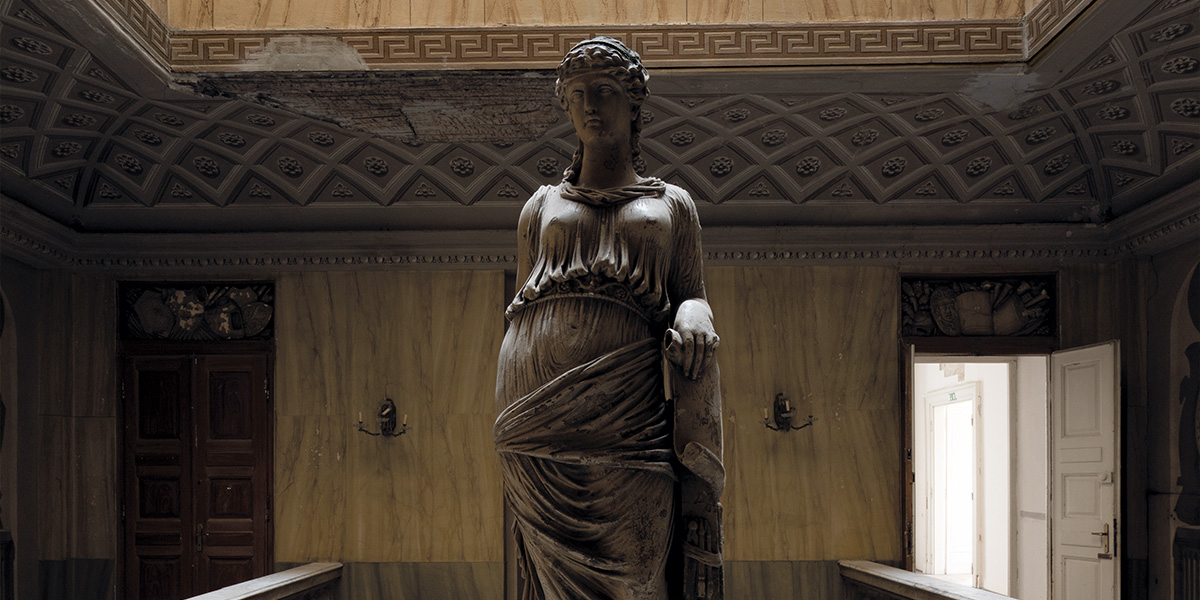
A neoclassical masterpiece overlooking the Rive of Trieste, Palazzo Carciotti was built in 1798 by architect Matteo Pertsch for Greek merchant Demetrio Carciotti. With its 4,000 square metres, two monumental facades, and rich sculptural decoration, the building tells the story of the city and the commissioning family through ten allegorical statues, including Portunus, Fortuna, Minerva, Fama, Apollo, and Abundantia. From 1832 to 1865, it hosted the first headquarters of Assicurazioni Generali, founded here in 1831. It was from this location that entrepreneur and patron Pasquale Revoltella envisioned participation in the Suez Canal project, recognizing its potential for Trieste. Today, with the Agorai Innovation Hub project, Palazzo Carciotti once again becomes a crossroads of ideas and innovation, continuing a tradition that looks to the future.Key research areas to address the great challenges of the future

The research centre will focus on key areas to generate new business models with a positive impact on people’s lives:
- Health and Wellbeing: developing technologies to ensure meaningful longevity, such as modeling tumor evolution and drug response using machine learning;
- Regenerative Agriculture and Food: researching and promoting regenerative agronomic practices to preserve biodiversity and renew ecosystems, focusing on well-being in cultivation areas;
- Mobility and Transportation: applying AI to improve the impact of mobility and logistics, through generative design and optimization;
- Finance and Financial Markets: using AI and machine learning to innovate finance, investment, risk management, and cybersecurity, supporting the development of capital markets for a secure and sustainable financial future.
AN IN-DEPTH LOOK
Together for Innovation
Agorai Innovation Hub brings together leading local and international economic and entrepreneurial entities, a public institution, academic bodies, and world-class research centres.“HumanAIze the Future”: the mission of the Scientific Hub, between digital culture and a new humanism
With the ambition to tackle the crucial challenges facing humanity and the planet, the Scientific Hub places scientific and technological research for the common good at its core. The claim “HumanAIze the Future” encapsulates a vision that goes beyond the technical dimension of artificial intelligence, promoting it as a driver of profound cultural and social transformation.
The name Agorai itself embodies the spirit of the project: a fusion of past and future, combining the original idea of the agorà - a space for dialogue and collective growth in the Greek polis - with artificial intelligence, a driving force for progress.
Agorai ideally gathers and relaunches the “innovative spirit” evoked by Chairman Sironi and Group CEO Donnet - a momentum that has already found fertile ground for development and vision. This vocation is rooted in the very history of Palazzo Carciotti, a crossroads of economic and cultural exchange, built by an entrepreneur from modern-day Izmir, ancient Smyrna - one of the oldest Mediterranean cities, founded in the 3rd millennium BCE and refounded by Alexander the Great in the 4th century BCE.
Today, this place comes back to life as the headquarters of a dynamic ecosystem, in continuity with the past, transforming into a generative hub of ideas, research, and innovation. It is the same spirit that inspired people like Pasquale Revoltella, for years the “first director” of Assicurazioni Generali, who conceived from this very building the participation in the construction of the Suez Canal, recognizing its transformative potential for global trade.
In the tradition of generative transformation, Agorai aspires to become an international reference point for ethical and inclusive artificial intelligence, capable of attracting talent and nurturing an open and collaborative ecosystem. At the heart of this ambition lies the desire to promote a digital culture inspired by a new humanism, where technology acts as a conscious tool to improve people’s lives and guide progress toward shared and sustainable goals.