17 November 2026
Generali at COP31: advancing climate resilience and the energy transition
At COP31 in Antalya, Generali contributed to discussions on adaptation and mitigation, highlighting the role insurance expertise, climate intelligence, prevention solutions and investment can play in strengthening resilience and supporting the energy transition
COP31 brought governments, businesses and civil society together in Antalya, Turkey, with a strong focus on moving from climate commitments to implementation. Against this backdrop, discussions addressed key priorities ranging from accelerating the clean energy transition to strengthening resilience and adaptation to the impacts of climate change.
From 10 to 14 November, Generali participated with a Group delegation including Lucia Silva, Chief Sustainability Officer, and Francesca Monti, Head of Group Climate Hub, alongside representatives from the Group’s countries and Business Units. Generali’s engagement at COP31 reflected the Group’s strategic commitment to sustainability, fully integrated into its business and operations under the “Lifetime Partner 27: Driving Excellence” strategic plan to support the green and just transition and strengthen societal resilience.
Across discussions with policymakers, climate experts, businesses and insurance industry leaders, Generali contributed its insurance and risk-management expertise to two closely connected priorities: strengthening climate resilience and supporting the transition towards resilient low-carbon economies, with a focus on prevention, protection gaps and long-term insurability.
Lucia Silva, Chief Sustainability Officer at Generali, said: “As a global insurer and investor, Generali firmly believes the insurance sector has an important role to play in supporting both the energy transition and climate resilience through risk expertise, prevention solutions and investment. High priorities for Generali include greater progress in avoiding losses before they occur, strengthening climate resilience, and supporting long-term insurability, while maintaining momentum on decarbonisation and the growth of resilient low-carbon economies. Our engagement at COP31, amid an imminent overshoot of the 1.5°C target, reflects how seriously we take this role, bringing our expertise and working with public and private partners to translate climate ambition into practical solutions for the businesses and communities we serve."
Francesca Monti, Head of Group Climate Hub at Generali added: “For us, COP31 represents an important opportunity to advance adaptation efforts, providing a forum to strengthen cooperation between insurers, public institutions and climate experts towards closing protection gaps and enhancing resilience to climate-related risks. We would also welcome greater recognition of the role that climate data, modelling, and forecasting capabilities can play in supporting risk-informed adaptation and decision-making.”

Adaptation: turning climate intelligence into resilience
As climate change increasingly affects people, businesses and economies, adaptation is essential to reduce exposure and vulnerability and preserve long-term insurability. At COP31, Generali highlighted the role insurers can play by combining climate data, modelling and forecasting with risk expertise to strengthen prevention and inform decisions. The Group also highlighted the importance of public-private partnerships in expanding loss prevention measures and encouraging investment in risk reduction, particularly for SMEs and vulnerable communities.
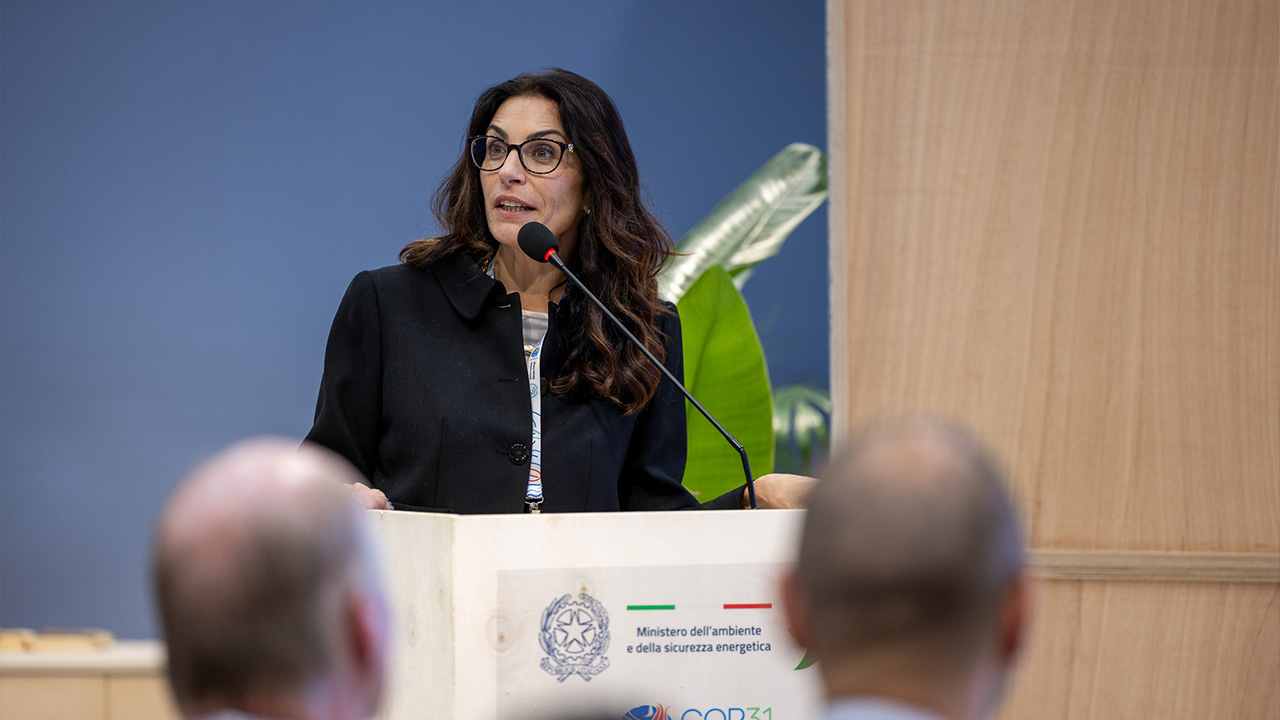
This approach was reflected in Generali’s contribution to “From Climate Data to Climate Resilience – Scaling Risk Intelligence, Digital Infrastructure and Transparency for Climate Action”, co-hosted at the Italian Pavilion with the Italian Ministry of Environment and Energy Security (MASE). Following opening remarks by Lucia Silva, the Generali Climate Hub, the Group’s centre of excellence on climate risk, joined the discussion on how forward-looking climate data, early-warning capabilities and risk intelligence can strengthen prevention and preparedness. Bringing together data, advanced analytics and strategic partnerships, the Hub helps the Group and its Business Units better understand and manage climate-related risks and strengthen resilience across markets.
The role of the insurance industry in strengthening resilience was further explored at the House of Insurance and UNEP FI during “The missing link: Valuing and rewarding resilience and improving insurability”. Alongside the discussion on prevention, adaptation and protection gaps, the House of Insurance also hosted the launch of the paper developed under the UNEP FI Principles for Sustainable Insurance (PSI) Adaptation & Resilience Working Group, with Generali playing a leading role in its Project Team and contributing to its key messages, recommendations and case studies.
A further dimension of climate preparedness emerged at The Economist’s roundtable “Forecasting the future: AI, weather prediction and national preparedness”, exploring how AI, satellite observation and predictive modelling can improve extreme-weather forecasting, risk assessment and preparedness. Together, these conversations reflected a central element of Generali’s approach: turning better knowledge of climate risks into action before risks become losses.
Mitigation: enabling the transition to a resilient low-carbon economy
On mitigation, Generali highlighted the importance of accelerating decarbonisation and scaling renewable energy and clean technologies to limit future climate risks and support the transition towards resilient low-carbon economies. Achieving this requires effective risk management, adequate insurance capacity and investment frameworks capable of mobilising private capital. As resilience partners and long-term investors, insurers can help manage transition risks, enable credible transition plans and create the conditions for investable projects.
This role was discussed at the Global Renewables Hub during “On the road to 35-by-35: Private sector perspectives for a future-proof, renewable, and electrified energy system”, which addressed the expansion of electrification, grids and storage and the contribution of renewables to competitiveness, energy security and resilience. As the first insurer to sponsor the Global Renewables Alliance initiative, Generali also reinforced the role insurance can play in supporting renewable energy deployment.
The financial and policy dimension of the transition was explored further at the MSCI/UNFCCC roundtable “The Transition Premium: The Financial Evidence for Policy and Readiness”, addressing the financial case for the transition, the role of policy and the economic costs of delayed action, as well as the importance of clear policy signals and credible transition pathways to mobilise capital at scale.
Generali’s participation at COP31 reflected the Group’s commitment to addressing climate change through its dual role as insurer and investor. By combining risk expertise and climate intelligence with protection solutions, prevention and long-term investment, Generali continues to work with public and private partners to strengthen resilience, support the transition and help protect businesses and communities in a changing climate.